top of page
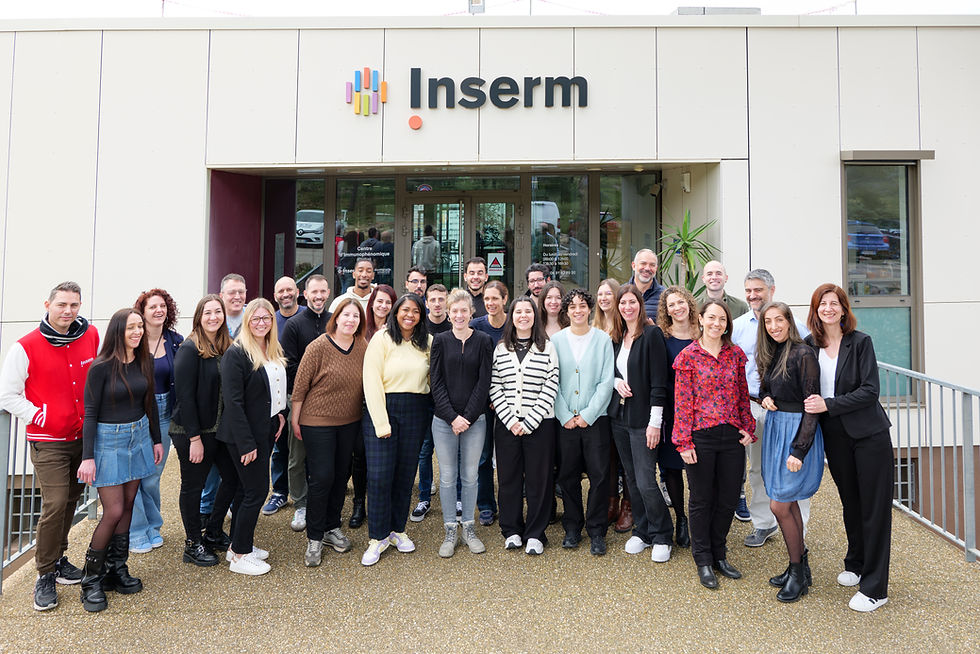
Ciphe's staff in front of the office and laboratories

Team & experts

Our teams & experts are at the heart of our core facilities.

At CIPHE, our experts are at the heart of our core facilities, using state-of-the-art knowledge, infrastructure and equipment to drive innovation and research.

Platform teams

P1

Preclinical Mice and Rat Model Generation

Preclinical Mice and Rat Model Generation
Our team of genetic engineering specialists are dedicated to genome editing and modeling of human disease. They designsand develos state-of-the-art preclinical models, including KO, KI, conditional, and humanized mouse and rat lines. With access to SOPF animal facilities, cryopreservation expertise, and both reproductive and experimental cohorts, we provide reliable and reproducible models to accelerate discovery.

P2

Functional Immunomics for Mechanistic Insights of Therapeutic Targets

Functional Immunomics for Mechanistic Insights of Therapeutic Targets
Our multidisciplinary team of experts in instrumentation, cytometry, and data analysis provides advanced tools for in-depth immune system profiling. We use routine flow and spectral cytometry, as well as mass and genomic cytometry (CITEseq), for high-content analysis to uncover the complexity of immune responses with precision. Our team is dedicated to supporting projects ranging from basic research to translational applications.

P3

Modeling Infectious diseases for innovative therapies

Modeling Infectious diseases for innovative therapies
Our dedicated team focuses on infection models in controlled BSL3 environments, offering specialized expertise in pathogen handling, functional evaluation, and disease modeling. With their experience, they enable safe, rigorous, and high-impact studies of infectious diseases.

P4

Mouse Colony Management

Mouse Colony Management
Our animal care and breeding specialists ensure reliable and certified management of research mouse colonies. From routine breeding to long-term colony maintenance, the team safeguards animal health, welfare, and genetic integrity, providing researchers with trusted cohorts for their studies.

P5

Administrative, Financial and Infrastructure Backbone

Administrative, Financial and Infrastructure Backbone
Behind the science, our administrative and communication team manages financial operations, contracts, and partnerships. They ensure smooth coordination, clear communication, and efficient support, allowing researchers to focus fully on their scientific goals.

Platform directors

P1

Preclinical Mice and Rat Model Generation for Translational Research

Frederic Fiore, PhD

Frederic Fiore, PhD

Chief Scientific Officer, Genetic Engineering & Murine Transgenesis Platform (GEMTis), CIPHE – Inserm IRHC

Dr. Frédéric Fiore is a recognized expert in preclinical genetic engineering and transgenesis, with more than three decades of experience in the development of advanced murine models for biomedical research. He began his career in 1993 under the mentorship of Dr. Daniel Birnbaum at the Marseille Cancer Research Center, where he contributed to the creation of the first knockout and knock-in mouse models in France. Dr. Fiore earned his PhD in Eukaryotic Biology (Genetic and Developmental Aspects) in 2002 from the Université de la Méditerranée, Faculty of Sciences of Luminy (Marseille, France). In 2007, Dr. Fiore joined Dr. Bernard Malissen at the Centre d’Immunologie de Marseille-Luminy (CIML), where he directed the IBiSA-accredited KOKI-Booster platform and played a pivotal role in the Fondation of the Centre d’ImmunoPHEnomique (CIPHE). Since 2012, he has led the Genetic Engineering and Mouse Transgenesis (GEMTis) platform within CIPHE, where he currently serves as Chief Scientific Officer (CSO). Throughout his career, Dr. Fiore has supervised the design, implementation, and management of over 700 mouse models and several rat models, serving more than 80 academic, biotech, and pharmaceutical laboratories worldwide. His leadership has been instrumental in implementing cutting-edge technologies, ensuring rigorous risk management, and expanding the platform’s capabilities to include new methodologies. Alongside his scientific leadership, he contributes actively to training and education, teaching genetic engineering in several Master’s programs and participating in institutional and regulatory continuing education initiatives. He has been deeply involved in national and international networks in mouse genomics and model development, including PHENOMIN/CELPHEDIA, INFRAFRONTIER, KOMP/IMPC, and the International Society for Transgenic Technologies (ISTT). Between 2010 and 2015, he coordinated the French national network ROCAD, integrating it into CELPHEDIA in 2016, and previously led Work Package 8: “New Transgenesis Techniques and ES Cells” within this framework. His contributions to preclinical research are reflected in numerous high-impact publications, including recent collaborative studies published in Nature Immunology (2025), Oncoimmunology (2025), Journal of Experimental Medicine (2025), JHEP Reports (2025), and EMBO Reports (2024). In addition to his academic and institutional responsibilities, Dr. Fiore is the founder of JCD Discovery (2022), spin off of CIPHE-INSERM and Janvier Lab Group, a biotechnology initiative dedicated to advancing and supporting translational research and drug discovery. Dr. Fiore’s achievements have been recognized through several distinctions, notably the Inserm Innovation Award (2011) and his selection for Inserm’s High-Potential Leadership Program (2016–2017). His career is characterized by a consistent commitment the advancement of genetic engineering methodologies, innovation, and collaboration in support of biomedical discovery. frederic.fiore@inserm.fr / ORCID ID: 0000-0001-7955-6594

P2

Functional Immunomics for Mechanistic Insights of Therapeutic Targets

Hervé Luche, PhD

Hervé Luche, PhD

Scientific Director, Immunomic Module, Centre d’ImmunoPHEnomics (CIPHE, INSERM/AMU/CNRS), Marseille, France

Dr Hervé Luche is an expert in T-cell and myeloid immunology, high-content cytometry, and single-cell transcriptomics (scRNAseq). He obtained his PhD in Developmental Immunology at the Medical University of Ulm, Germany, in the laboratory of Hans-Joerg Fehling, and carried out postdoctoral studies at the CIML, Marseille, in the laboratory of Bernard and Marie Malissen, where he engineered knock-in mouse strains to study lineage commitment and T-cell differentiation. Since 2012, Dr Luche has been a key scientist at the Centre d’ImmunoPHEnomics (CIPHE), where he directs the Immuno-Phenotyping Module. His team develops standardized methodologies, multi-parametric flow, mass, and spectral cytometry panels, and functional assays to establish immune system status in basal, inflammatory, oncology, and infectious contexts in mice. These standardized approaches enable robust immunophenotyping across preclinical studies and translational research projects. Dr Luche contributes to national and international phenotyping initiatives, including the International Mouse Phenotyping Consortium (IMPC), and has been leading a team of 5 engineers since 2018. His group focuses on immune profiling, T-cell differentiation, dendritic cell biology, and integrative single-cell analyses, providing mechanistic insights into immunopathology, tumor immunology, and host-pathogen interactions. As a PI, Dr Luche has obtained multiple competitive grants from ANR, INCA, SFB, and European funding programs, supporting projects ranging from high-dimensional immune profiling to translational immunotherapy studies. He actively participates in scientific training, organizes workshops, and contributes to the development of new analysis pipelines for multi-modal cytometry and scRNAseq data. Dr Luche has authored over 50 peer-reviewed publications, including in Science, Immunity, EMBO Journal, Frontiers in Immunology, and has contributed to key methodological advances in flow and mass cytometry, lineage tracing, and single-cell immune profiling. His work combines cutting-edge immunomics with robust preclinical modeling to improve translational predictions for immune-based therapeutics. In addition to his research, Dr Luche is a scientific advisor and co-founder of JC Discovery, mentoring the next generation of immunologists and fostering collaborations between academia and industry. He is recognized for his expertise in high-dimensional cytometry, T-cell and dendritic cell biology, and immune system modeling, positioning CIPHE as a leading platform for preclinical immune phenotyping in Europe. herve.luche@inserm.fr

P3

Modeling Infectious Diseases for Innovative Therapies

Ana Zarubica, PhD

Ana Zarubica, PhD

PhD, IRHC INSERM, Scientific Head of CIPHE platform for Infectious Disease Modeling and Containment Facilities, > 30 papers

Dr. Ana Zarubica is the Director of the Centre d’Immunophénomique (CIPHE), a leading academic service, research, and technology unit specializing in mouse genetics, immunology, and preclinical modeling. Founded in 2011 by Dr. Bernard Malissen, CIPHE integrates technological platforms to support the design, generation, and functional analysis of rodent models, focusing on inflammation, infection, and cancer. Dr. Zarubica provides strategic and scientific leadership, oversees the development of new technologies, and cultivates collaborations with both academic and industrial partners to advance translational research. Dr. Zarubica earned her PhD in Immunology from Aix-Marseille University (2009), training at the Centre d’Immunologie de Marseille-Luminy (CIML) under Dr. Giovanna Chimini via the European ESR-RTN Marie Curie program. She completed postdoctoral research at the Centre de Recherche en Cancérologie de Marseille (CRCM) with Dr. Michel Aurrand-Lions, studying leuko-stromal interactions in hematopoiesis. She also received training in administrative and financial functions at INSERM PACA, reflecting her expertise in leading complex research infrastructures. Since March 2020, Dr. Zarubica has directed CIPHE’s contributions to preclinical modeling of emerging respiratory infections, including SARS-CoV-2. Leveraging the center’s BSL-3/BSL-2 infrastructure and genetic engineering and immunology expertise of CIPHE teams, knock-in mouse models expressing human ACE2 (hACE2) have been developped, enabling in-depth analyses of viral pathogenesis, immune responses, and the lung-brain axis in COVID-19. These models have been critical for testing antivirals, monoclonal antibodies, vaccines, and anti-inflammatory therapies in preclinical settings. CIPHE’s teams are currently establishing advanced technological platforms for plethysmography, nebulization, and behavioral studies, integrated organoid models, and contributing to many collaborative projects with national and international partners, including JAX Laboratory, KOMP, Institut Pasteur, VRI, and VirPath Lyon. Dr. Zarubica has secured multiple competitive grants supporting translational and preclinical research, since 2020. The work of CIPHE’s team has yielded publications in Nature Communications, Communications Biology, Advanced Science, EBioMedicine, Frontiers in Cellular and Infection Microbiology, and Immunity, covering antiviral therapeutics, host-pathogen interactions, and mucosal immunology. Dr. Zarubica has been awarded the INSERM Prize “Appui à la Recherche” (2021) and recognized in Inserm and AMU High-Potential Leadership Programs (2018–2020, 2025–2026). Beyond research, Dr. Zarubica actively contributes to immunology curriculum and training programs, and participates in national and international committees and consortia, including IBiSA, PHENOMIN, CELPHEDIA, ANRS-MIE, ERIC INFRAFRONTIER. She is a scientific advisor and co-founder of JC Discovery  ,a spin-off bridging CIPHE’s academic expertise with translational applications in therapeutic development. ana.zarubica@inserm.fr / ORCID ID: 0000-0001-5488-4137

P4

Mouse Colony Management

Amandine Sansoni

Amandine Sansoni

IR Inserm, Scientific Head of the CIPHE Mouse Colony Management Platform, > 15 papers

Amandine Sansoni has over 20 years of experience in mouse model experimentation, including colony management, surgery, infectious models, genotyping, and phenotyping.  She leads all operational aspects of the platform, including cryopreservation rederivation and cohort production , ensuring high-quality and reproducible models for preclinical research.  Her team supports disease modeling projects in immunology, neurology, and infectious diseases.  As Animal Welfare Officer (SBEA), she promotes best practices and the 3Rs principles (Replacement, Reduction, Refinement). Amandine is also a certified trainer in regulatory animal experimentation courses and advises researchers on ethical, scientifically sound protocols.  She is deeply involved in collaborative projects requiring long-term colony management and complex breeding strategies. amandine.sansoni@inserm.fr

Team & experts

Chercheur Homme

Frederic Fiore

PhD, IRHC Inserm, Scientific Head of CIPHE team

as a principal investigator, has a long-standing experience and is an expert in mouse genetics, genome editing and mouse and rat transgenesis. He leads the development of innovative rodent models as an advanced tool for modeling of human disease and its genetic validation and characterization. Frederic Fiore and his team developed more than 700 mice models mimicking human diseases in different therapeutic domains (immunology, neurology, rare-diseases, auto-immunity, inflammation, infection, cancer) and contributed significantly to understanding the mechanism of treatment efficacy and underlying pathologies.

P1

Preclinical mice and rat model generation

Chercheur Homme

Frederic Fiore

PhD, IRHC Inserm, Scientific Head of CIPHE team

Collapsible text is perfect for longer content like paragraphs and descriptions. It's a great way to give people more information while keeping your layout clean. Link your text to anything, including an external website or a different page. You can set your text box to expand and collapse when people click, so they can read more or less info.

P1

Preclinical mice and rat model generation

Chercheur Homme

Frederic Fiore

PhD, IRHC Inserm, Scientific Head of CIPHE team

Collapsible text is perfect for longer content like paragraphs and descriptions. It's a great way to give people more information while keeping your layout clean. Link your text to anything, including an external website or a different page. You can set your text box to expand and collapse when people click, so they can read more or less info.

P1

Preclinical mice and rat model generation

Chercheur Homme

Frederic Fiore

PhD, IRHC Inserm, Scientific Head of CIPHE team

Collapsible text is perfect for longer content like paragraphs and descriptions. It's a great way to give people more information while keeping your layout clean. Link your text to anything, including an external website or a different page. You can set your text box to expand and collapse when people click, so they can read more or less info.

P1

Preclinical mice and rat model generation

bottom of page